
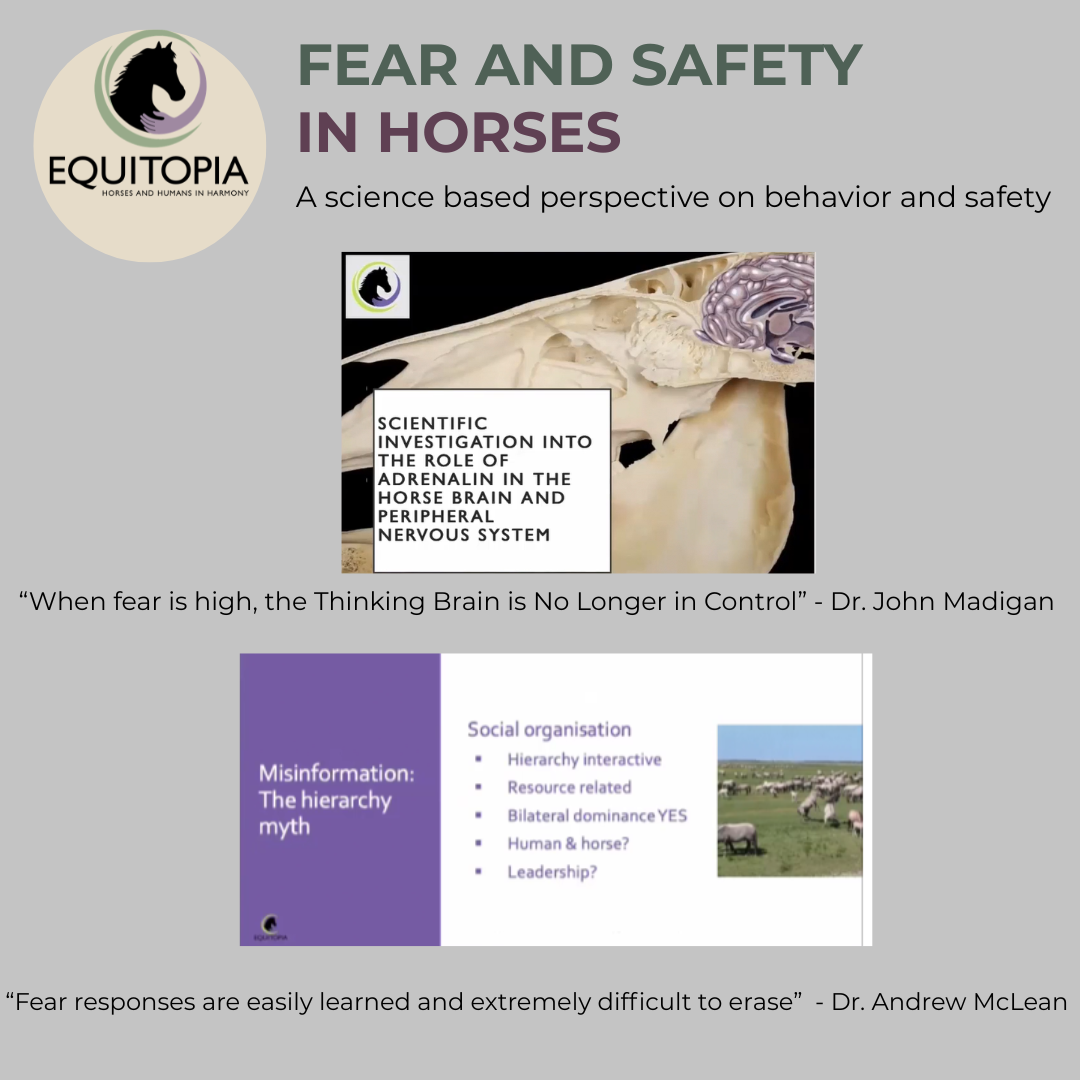
Safety is not common sense — it is understanding
In horsemanship, safety is often described as “common sense.”
But if that were true, accidents would be rare.
In reality, safety in horse–human interactions depends on something far deeper:
understanding how fear operates in both the horse and the human nervous system.
At Equitopia, we approach safety not as control—but as a shared biological and emotional process.
What fear really is (in both horse and human)
Fear is not a flaw.
It is a survival system.
In horses, fear activates the flight response—a whole-body reaction designed to escape perceived danger.
This response is:
- Fast
- Automatic
- Not governed by reasoning
Once triggered, the horse is no longer learning—he/she is surviving.
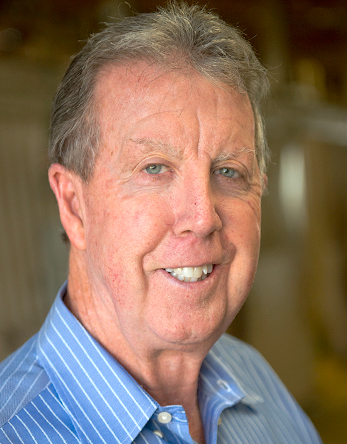
Dr. John Madigan’s work in equine neurobiology shows that when a horse becomes highly aroused, the thinking parts of the brain become unavailable, and behavior is driven by instinct rather than cognition.
👉 This is the critical shift:
A reacting horse is not choosing behavior.
He/She is expressing a neurobiological state.
The Equitopia Principle: Fear disrupts learning and safety
Across disciplines, one truth is consistent:
A horse cannot learn effectively when he/she is afraid.
Fear:
- Reduces attention and processing
- Narrows perception to threat
- Overrides trained responses
This is why pushing a horse “through” fear often leads to:
- Escalation (spooking, bolting, bucking)
- Confusion
- Long-term sensitization
Instead of creating safety, it often creates future risk.
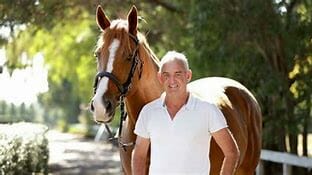
Dr. Andrew McLean: Fear is learned quickly—and remembered deeply
From an equitation science perspective:
- Fear responses are rapidly acquired
- They are strongly retained over time
- They are difficult to erase, only managed
This has profound implications:
Every overwhelming experience a horse has:
- Becomes part of his/her behavioral memory
- Lowers his/her future threshold for reactivity
👉 Training, therefore, is not just teaching behavior.
It is shaping the horse’s emotional history.
Why safety breaks down (even with experienced riders)
Most accidents are not caused by “bad horses.”
They arise from:
- Misreading early signs of fear
- Training above the horse’s cognitive threshold
- Human tension or anticipation
- Overexposure without recovery
Human error is a major contributor to equestrian accidents, reinforcing the need for deeper awareness—not just skill.
.
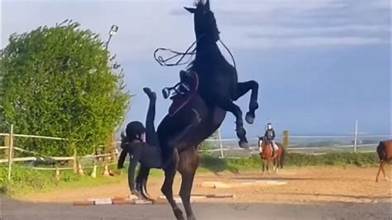
The moment before the reaction: where safety is won or lost
Horses rarely go from calm to explosive without warning.
Early indicators include:
- Subtle tension in the body
- Changes in breathing
- Fixation on a stimulus
- Loss of rhythm or softness
This is the window of intervention.
Dr. McLean’s work emphasizes recognizing and responding to these early signs before the full flight response develops—because once it does, control is largely lost.
The Equitopia Safety Framework™
Safety emerges when three systems are aligned:
1. The Horse’s Nervous System
- Feels safe enough to remain responsive
- Is not pushed beyond threshold
2. The Human Nervous System
- Regulated, aware, and non-reactive
- Not amplifying fear through tension or urgency
3. The Training Environment
- Structured for clarity, not overwhelm
- Progresses within the horse’s capacity to cope
👉 When one breaks down, safety is compromised.
👉 When all three align, safety becomes sustainable.
What actually creates a horse that is “safe”
Safety is not obedience.
It is predictability under pressure.
This comes from:
Clear, consistent training (Equitation Science)
Training aligned with how horses learn:
- Timely release of pressure
- Clear, singular signals
- Avoidance of punishment and flooding
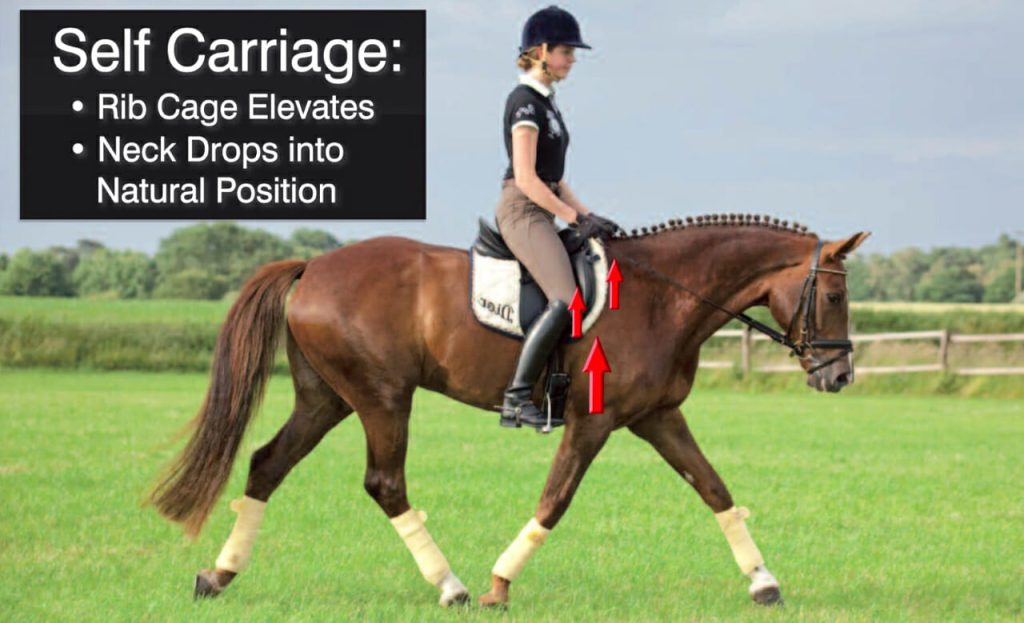
Emotional regulation (Neurobiology)
Supporting the horse’s ability to:
- Process stimuli
- Recover from stress
- Stay within a functional arousal level
Gradual exposure, not overwhelm
- Introducing novelty in manageable increments
- Allowing investigation and retreat
- Building confidence through success
What does NOT create safety
- Forcing exposure (“they’ll get over it”)
- Punishing fear responses
- Ignoring early warning signs
- Training in a state of chronic stress
These approaches may suppress behavior temporarily—but increase long-term risk.
A shift in perspective
A horse is not responsible for your safety.
But your understanding of the horse determines it.
True safety is not created through dominance or control.
It is created through:
- Knowledge
- Awareness
- Timing
- Emotional regulation
Key takeaway
Fear is not the problem.
Unrecognized and unmanaged fear is.
When we understand:
- How fear works in the horse
- How fear works in ourselves
- And how training interacts with both
…we move from reacting to risk
to creating environments where safety naturally emerges.
About this approach
This perspective integrates:
- Equine neurobiology (Dr. John Madigan)
- Equitation science and learning theory (Dr. Andrew McLean)
- Human emotional regulation and cognition
As taught in Equitopia’s Fear and Safety for Horse and Rider course—designed to help riders understand, rather than override, the systems that drive behavior.
More about Dr. John Madigan:
Dr. John Madigan is a globally renowned veterinarian whose groundbreaking contributions have transformed the fields of equine neonatal medicine, infectious diseases, animal welfare, and disaster response. With an illustrious career spanning decades, Dr. Madigan has become a pioneer in advancing both veterinary science and animal welfare practices.
Dr. Madigan is best known as the inventor of the Madigan Squeeze Procedure, a revolutionary technique for treating neonatal maladjustment syndrome (often referred to as “dummy foal syndrome”) in foals. His innovative approach has significantly improved survival rates and quality of life for countless foals, earning widespread recognition and adoption in veterinary practices worldwide.
Dr. Madigan’s ingenuity extends beyond neonatology into the development of specialized equipment for the rescue and care of large animals. He spearheaded the creation of the UC Davis Anderson Sling, a vital tool for supporting injured horses and other large animals during recovery and rehabilitation. Additionally, he designed the Large Animal Lift and the Loops Rescue System, essential resources for safely extracting and stabilizing animals in emergency and disaster scenarios. These innovations have saved countless lives and are widely utilized in veterinary practices and rescue operations worldwide.
A prolific author, Dr. Madigan penned the seminal text Manual of Equine Neonatal Medicine, a trusted resource for veterinarians, students, and equine caretakers alike. His expertise in equine neonatology has established him as a leading authority in diagnosing and treating conditions affecting newborn horses.
In addition to his work in neonatology and rescue equipment, Dr. Madigan has made significant strides in the study of infectious diseases and animal welfare. His research has shed light on critical issues affecting both domestic and wild animals, enhancing our understanding of how to safeguard animal health and well-being.
Dr. Madigan is also a trailblazer in disaster and emergency response for animals. His efforts have shaped protocols for animal rescue during natural disasters, ensuring that animals receive timely and effective care during crises. His leadership in this field underscores his lifelong commitment to the intersection of science and compassion.
Throughout his career, Dr. Madigan has received numerous accolades for his contributions to veterinary medicine and animal welfare. His work embodies a deep dedication to advancing knowledge, improving animal health, and promoting ethical practices in veterinary care.
Whether developing life-saving techniques, designing innovative rescue tools, leading disaster response efforts, or mentoring future generations of veterinarians, Dr. John Madigan’s legacy continues to leave an indelible mark on veterinary medicine and animal welfare worldwide.
More about Dr. Andrew McLean
ACADEMIC BACKGROUND
• Specialist academic areas are Animal Cognition (animal mental processes) and Equine learning/Training Psychology.
• PhD thesis (University of Melbourne) entitled “The Mental Processes of the Horse and their Consequences for Training” (1994-2004). Supervisors: Professors Rolf Beilharz and Paul Hemsworth) • Bachelor of Science degree (double major in zoology, 1973 to 1975). • Diploma of Education, University of Tasmania (1979).
PROFESSIONAL
• Full time Tutor/ Lecturer, Ecology, genetics, behaviour, physiology and biochemistry, University of Tasmania, (1976 to 1978)
• Part-time lecturer, University of Tasmania, (1981 to 1990)
• CEO ESI (Equitation Science International) (2014 to present)
• Director AEBC (The Australian Equine Behaviour Centre) (1995 to present)
• Chairman, The HELP Foundation (Human Elephant Learning Programs) (2010 to 2018)
• Board member PCA (Pony Club Australia) (2016 to present)
• Co-Founder ISES (The International Society for Equitation Science) (2005)
• Former President of ISES (The International Society for Equitation Science) (2016 replaced current President for health reasons), 2007 – 2009, 2011 – 2012 replaced current President for career reasons).
• Co-Founder and Senior Vice President of HELP (Human Elephant Learning Programs) 2010
• Former and Founding President of VEA (The Victorian Event Riders Association) (1990 to 1998)
• Former President of TEA (The Tasmanian Eventing Association) (1981 to 1989) ACADEMIC AWARDS AND POSITIONS
• Honorary Fellow of the International Society for Equitation Science (2015) • PhD Scholarship, 1994
• Eureka Science Prize, 2011 (co-winner)
• John H Daniels Fellowship, 2014. National Sporting Library, Virginia, USA.
• Premio Flambo Award for Animal Welfare – The Italian Equestrian Sports Federation 2016
• Honorary Associate, Faculty of Veterinary Science, University of Sydney. 2006 to present.
FORENSIC ETHOLOGY
• Expert witness in Australia, New Zealand, USA and Ireland since 1998.
EQUESTRIAN SPORT ACHIEVEMENTS
• Represented Australia in eventing (Three Day Event) in 1989. • Shortlisted for World championships, (3DE) 1990.
• State and National titles in both dressage and eventing.
• Represented Tasmania four times and Victoria twice in eventing. • Represented Victoria in FEI dressage.
• Trained to Grand Prix level in dressage.
• Competed successfully in show jumping to Grand Prix level.
• Trained International Prix St George Derby winner, CDI, 2004.
• Trained Woodmount Magic, (first Australian-trained Eventing stallion sold to Europe), 1995.
• Raced in bareback races in Australia and New Zealand (1974 to 1981).
• Held a race trainer’s licence from 1985 to 1991.
• Institute of Sport scholarship 1990, 1991.
• Olympic Academy delegate, 1991


